Cart
0
PVD vs Wooden vs Glass Partitions: Which Should You Choose?

Most partition shopping starts with a style decision and never actually gets to the material decision, which is backwards, because the material is what determines whether you're happy with it in two years, not just on day one.
Solid wood partitions (jali-style or slatted)
Wood slat partitions bring warmth that metal and glass can't match, and they're genuinely good at filtering light rather than either blocking or fully exposing it. The trade-offs: wood needs periodic re-oiling or re-polishing to avoid looking tired, it's more vulnerable to humidity swings than metal, and it doesn't take fine, sharp detailing the way laser-cut metal does. If you want the traditional version of this look rather than our metal-and-wood hybrid designs, we've written separately about PVD partitions vs traditional wooden jali.
Plain glass partitions (unframed or minimally framed)
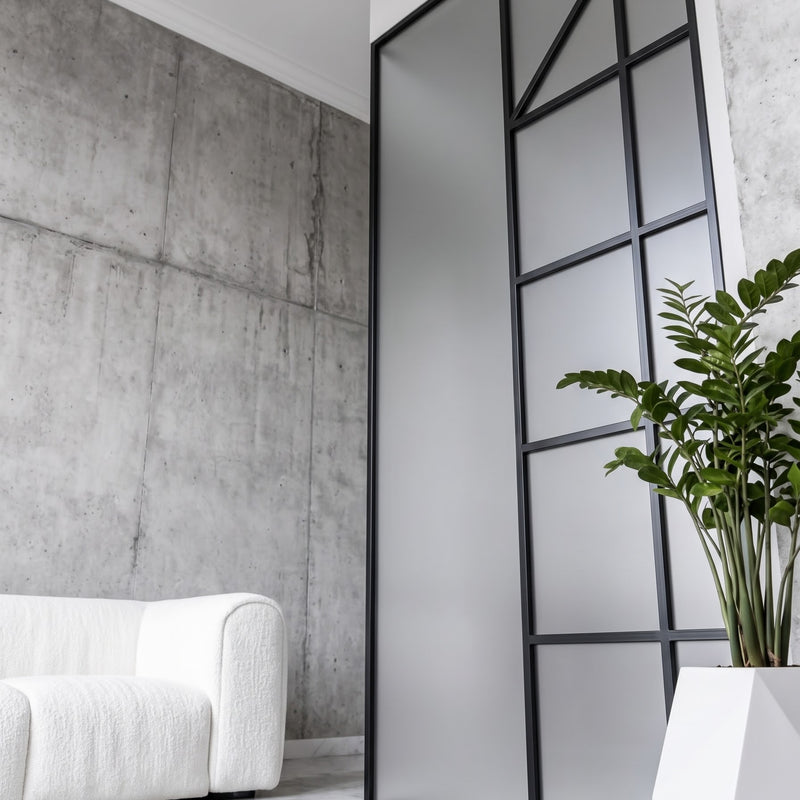
A plain glass panel is the most visually unobtrusive option: maximum light transmission, minimum visual weight. But it's also the least private option by a wide margin, shows fingerprints and smudges more than any other material, and without a strong frame, doesn't read as a design statement the way a detailed partition does.
PVD-coated stainless steel partitions
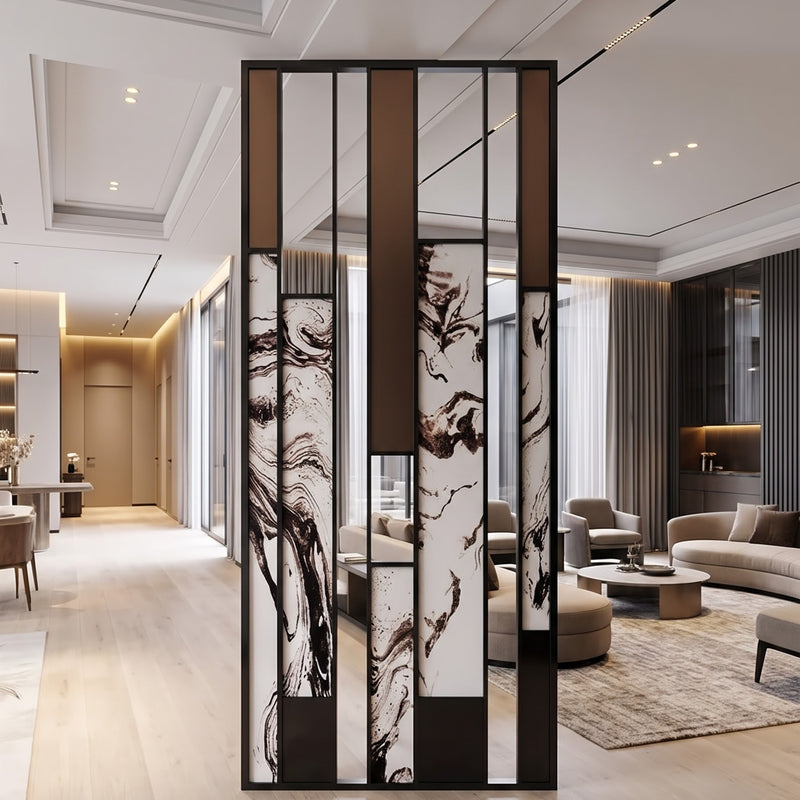
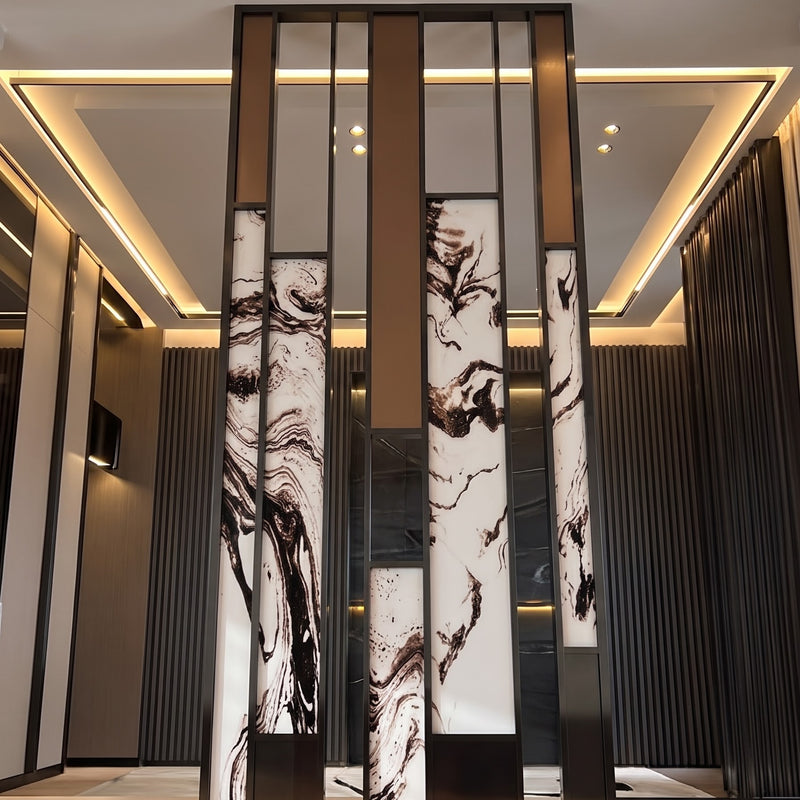
This is the category our PVD Partitions collection is built around, and the reason it's become the default choice over both alternatives above. The coating is baked into the metal rather than sitting on top of it, so there's no re-oiling, re-polishing, or tarnishing to worry about. It also combines well with the other two materials instead of only competing with them. Most of our designs pair a PVD metal frame with glass panels, marble inlays, or wood-slat inserts, which is really the best of all three rather than a pure trade-off. We cover how the coating itself is produced in how SS PVD coating is actually made, if you want the technical version.
Where that combination shows up
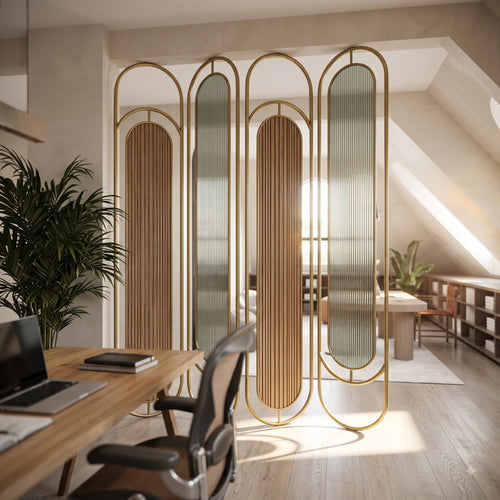
- Gold Frame Fluted Glass Partition: PVD metal frame with ribbed glass inserts, giving you the light transmission of glass with a frame that never needs maintenance.
- Wooden Slat Partition Shelf Divider: a wood-forward design that still uses a PVD-coated metal structure underneath, so the maintenance-heavy part of a pure-wood partition is reduced.
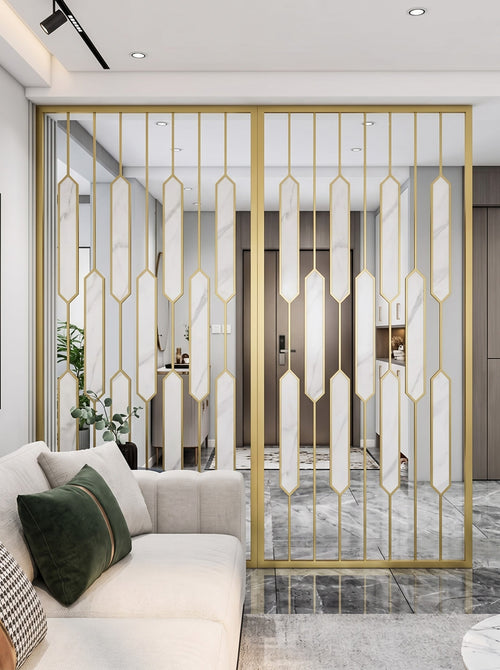
- Marble and Metal Partition Design: marble panel inlays set into a PVD frame, for a heavier, more formal look than glass or wood alone.
How to actually decide
If light transmission and keeping the space feeling open matters most, lean glass-forward. If you want warmth and texture and don't mind some upkeep, a wood-slat design is still a reasonable choice for a lower-humidity room. If you want something that looks the same in five years as it does on day one with zero maintenance, a PVD metal-framed design, whichever insert material you pick, is the one built for that.
See the full range of frame, glass, marble and wood-slat combinations in our PVD Partitions collection, or browse glass-panel partitions and decorative room dividers specifically. Once you've settled on a material, our room by room placement guide can help with where it actually goes. Every piece ships free across India with a 5-year warranty.