Cart
0
PVD Partitions vs Traditional Wooden Jali

Jali screens, carved or latticed wooden panels, have been used in Indian architecture for centuries to filter light and air while maintaining privacy, long before anyone called it a "room divider." It's worth comparing honestly against a modern PVD partition rather than treating one as simply outdated.
Traditional jali, hand carved in wood or stone, carries a craft value that a factory-produced piece genuinely can't replicate. Each piece has small variations that come from being made by hand, and the pattern language, often geometric latticework or floral motifs, connects to a design tradition with real depth. That craft comes at a cost beyond the purchase price: wood jali needs periodic maintenance (oiling, pest treatment, occasional repair of carved details), and the fine latticework can be fragile compared to a laser-cut metal equivalent.
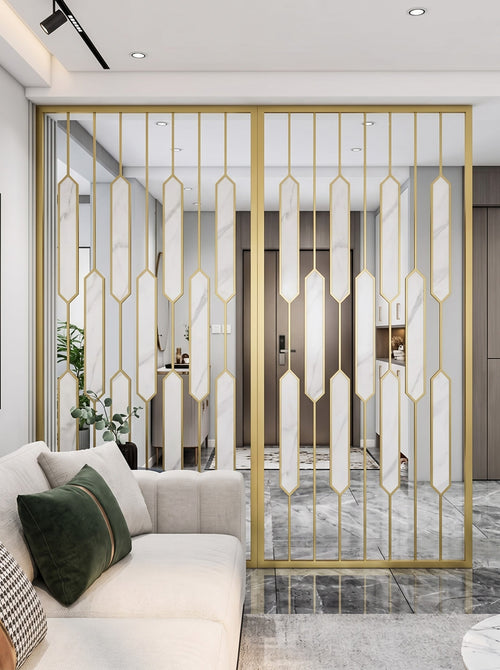
A PVD partition borrows the functional idea, filtering light and air while dividing space, but trades the hand-carved craft element for consistency and durability. Laser-cut metal holds sharper, more repeatable geometric detail than hand carving can, and the PVD coating means none of the maintenance a wood jali needs. Our Golden Geometric Room Divider and similar geometric designs in our geometric partitions collection are the closest modern equivalent to a jali's light-filtering function.
Neither is strictly better, they serve somewhat different goals. If the handmade, heritage craft element matters to you specifically, a genuine wood jali piece (often sourced separately through artisan sellers rather than a furniture catalog) is the more honest choice. If you want the light-filtering function with zero ongoing maintenance and more design consistency, a PVD metal partition is built for that.
Browse our interpretation of the geometric, light-filtering idea in the full PVD Partitions collection. Every piece ships free across India with a 5-year warranty.