Cart
0
SS PVD Partition Guide: Finishes, Designs & What to Know Before You Buy

If you've been searching for a room divider that won't tarnish, chip, or need re-polishing every year, you've probably come across the term SS PVD partition. It's become the go-to choice for Indian homes and offices over painted MS (mild steel) or raw brass partitions — but most buyers don't actually know what "PVD" means or what to check before ordering one. Here's the full picture.
What is a PVD partition?
PVD stands for Physical Vapor Deposition — a coating process where a thin layer of metal (titanium-based, usually) is vaporized in a vacuum chamber and bonded onto stainless steel at a molecular level. The result is a finish that's part of the metal itself, not a paint or plating layer sitting on top of it.
That's the whole reason PVD partitions exist: a regular brass or painted-steel partition tarnishes, scratches through to bare metal, and needs re-lacquering every couple of years. A PVD-coated stainless steel partition doesn't. The gold, rose gold, black, champagne, or bronze finish is baked into the surface, so it resists scratches, humidity, and everyday wear without any maintenance.
Why choose PVD over brass or painted steel
- Tarnish-proof: No yellowing, no dulling, no re-polishing — unlike brass, which oxidizes within months in humid Indian weather.
- Scratch-resistant: The coating is significantly harder than standard electroplating, so it holds up in high-traffic spaces like entryways and office receptions.
- Zero maintenance: A dry or lightly damp cloth is all it needs — no polish, no lacquer top-ups.
- Precision detailing: Because the base material is laser-cut stainless steel, the geometric and ornamental patterns hold sharper lines than hand-worked brass.
Finishes to choose from
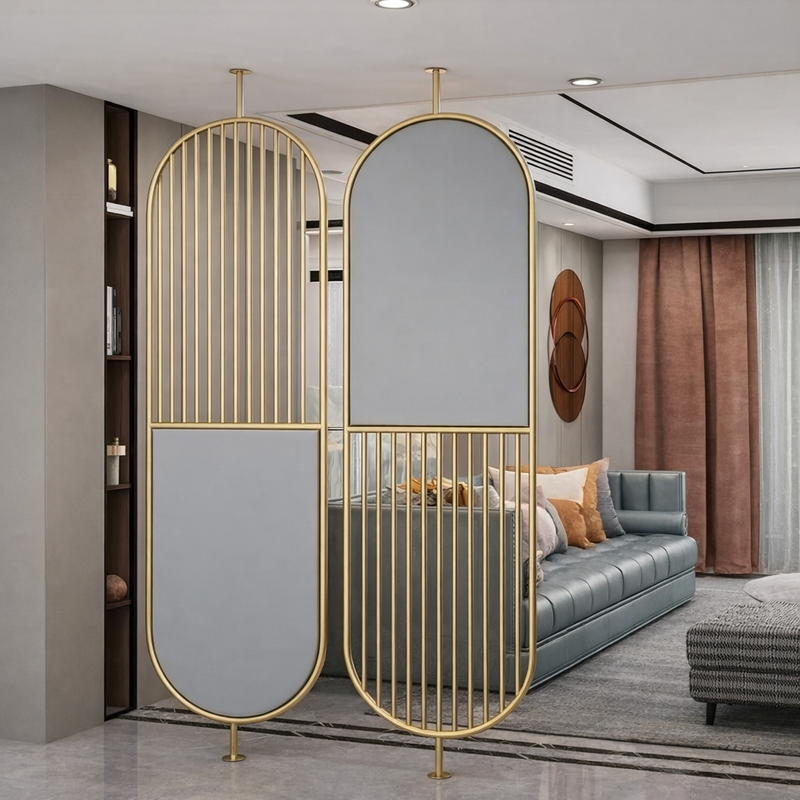
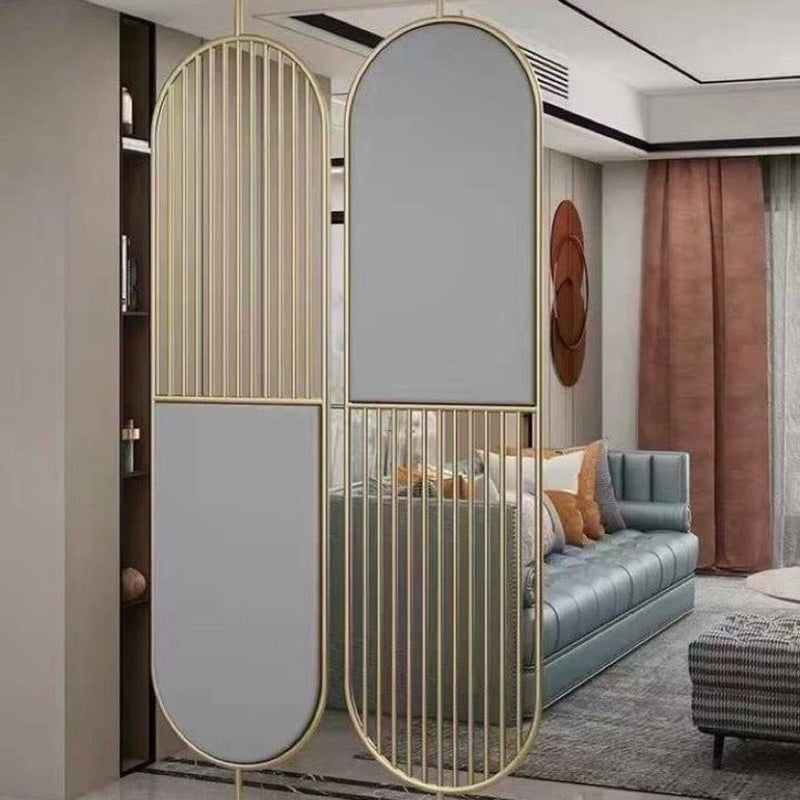
Kraft Vision's SS PVD partition collection is laser-cut and available in five finishes — Gold, Rose Gold, Black, Champagne, and Bronze — so the partition can match either a warm brass-and-wood interior or a cooler black-and-marble one without looking like an afterthought.
Design styles worth knowing about
"PVD partition" isn't one look — the coating is just the finish; the design underneath varies a lot. A few directions we make:
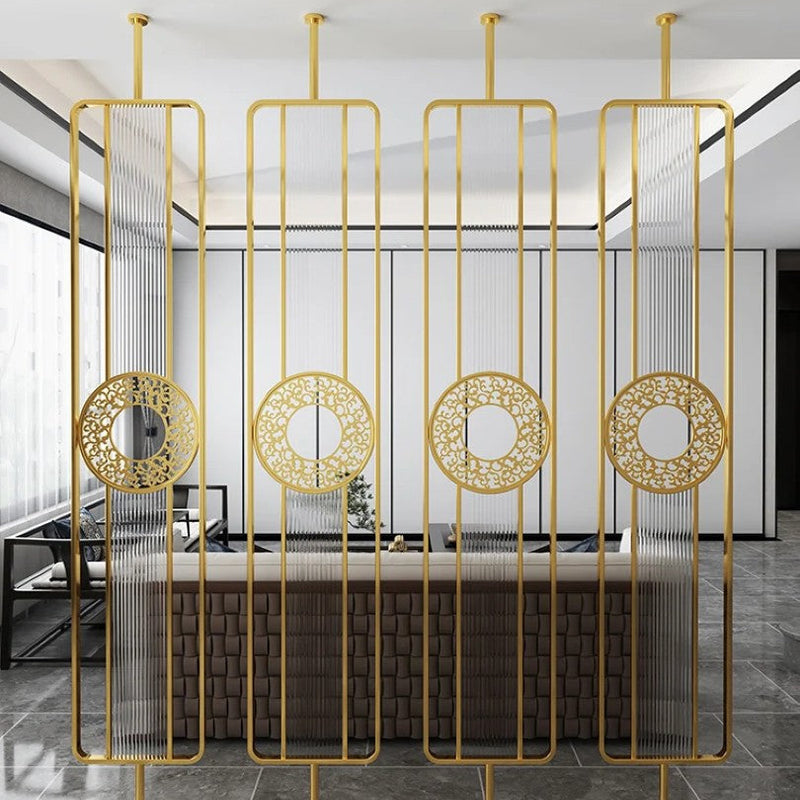
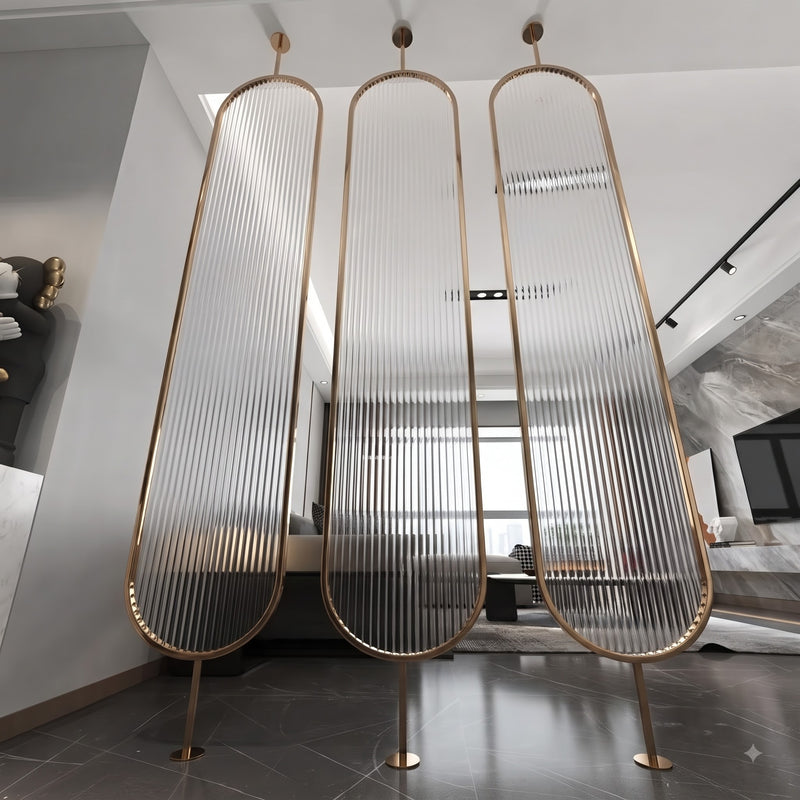
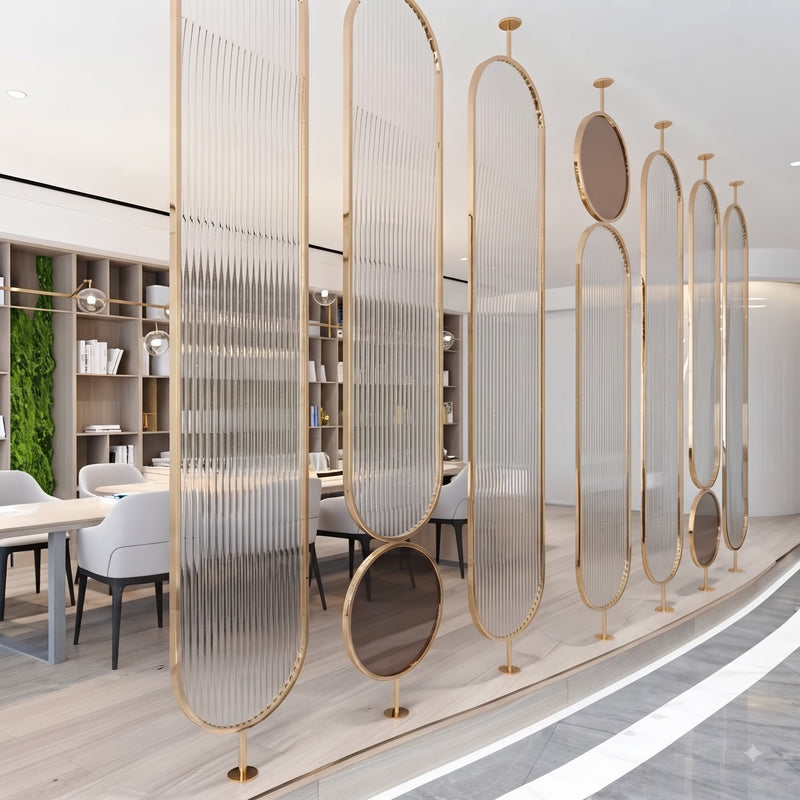
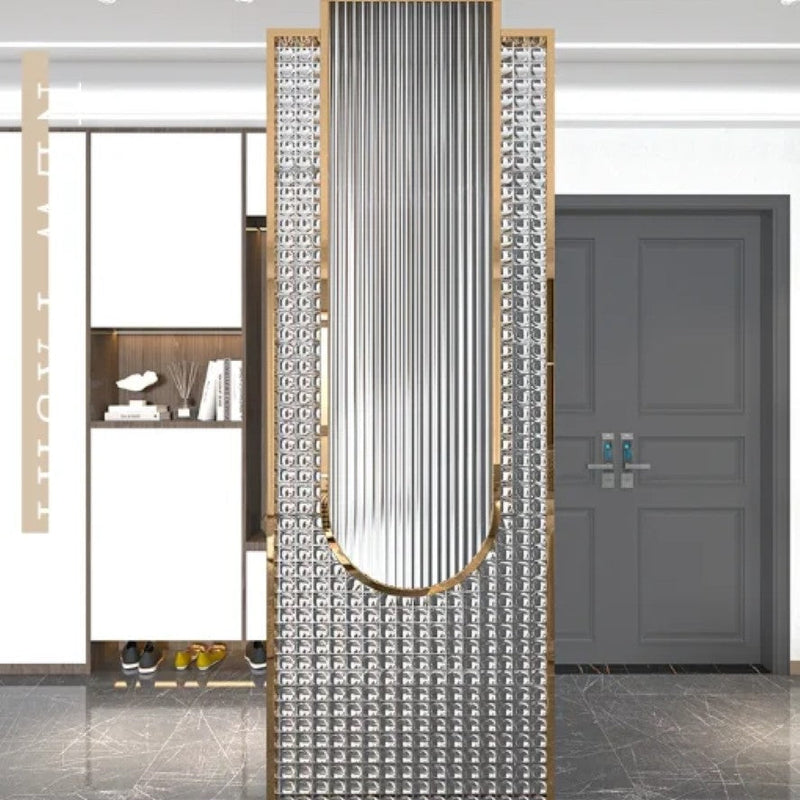
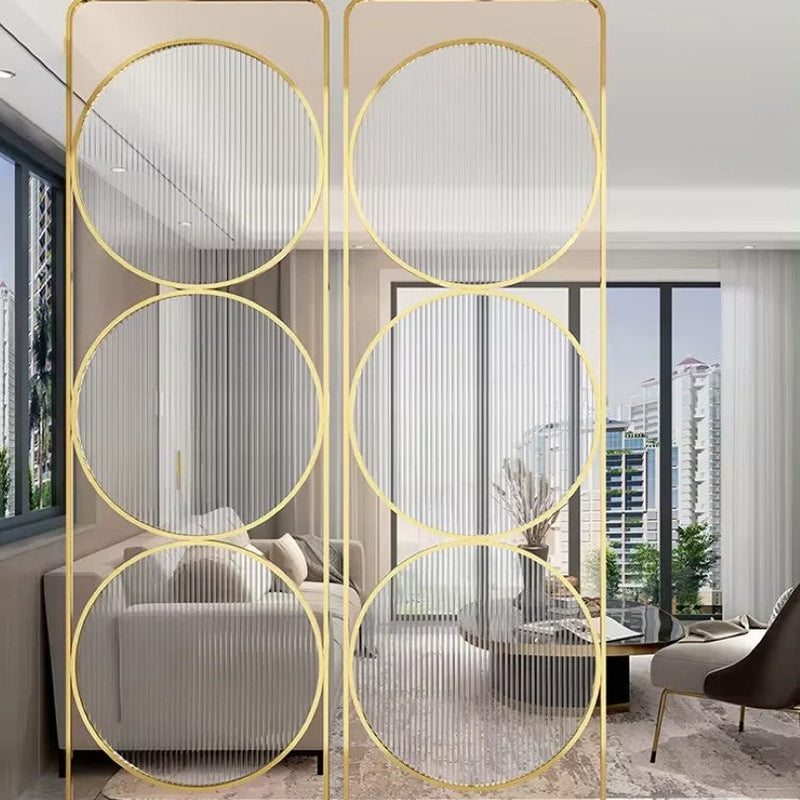
- Glass-panel partitions — gold or black frames with ribbed, frosted, or mirror-accented glass inserts, like our Golden Frame Room Divider with Frosted Ribbed Glass. These let light through while still blocking the sightline, which works well between a living and dining area.
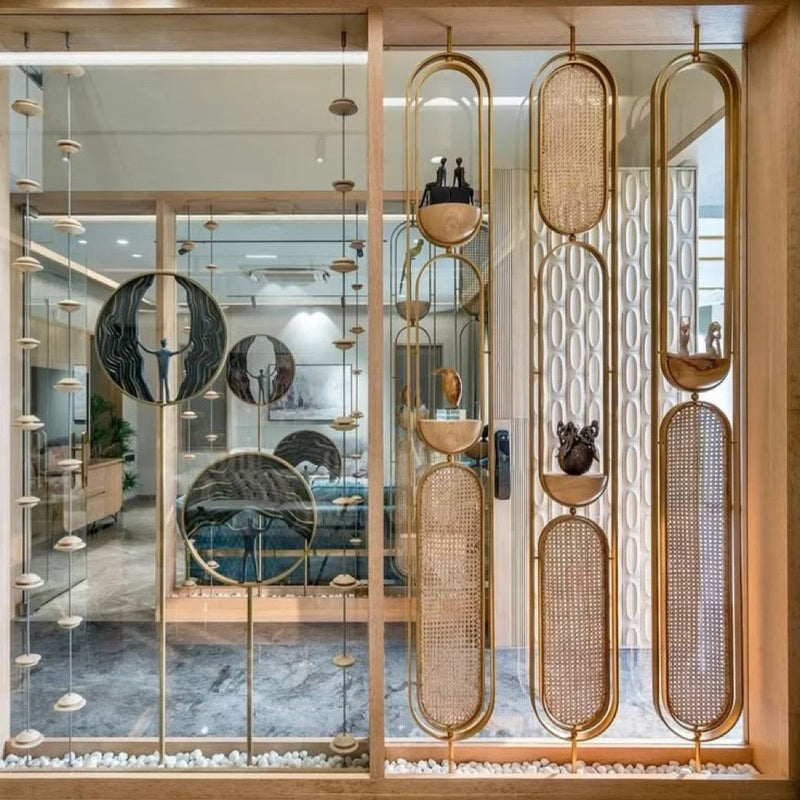
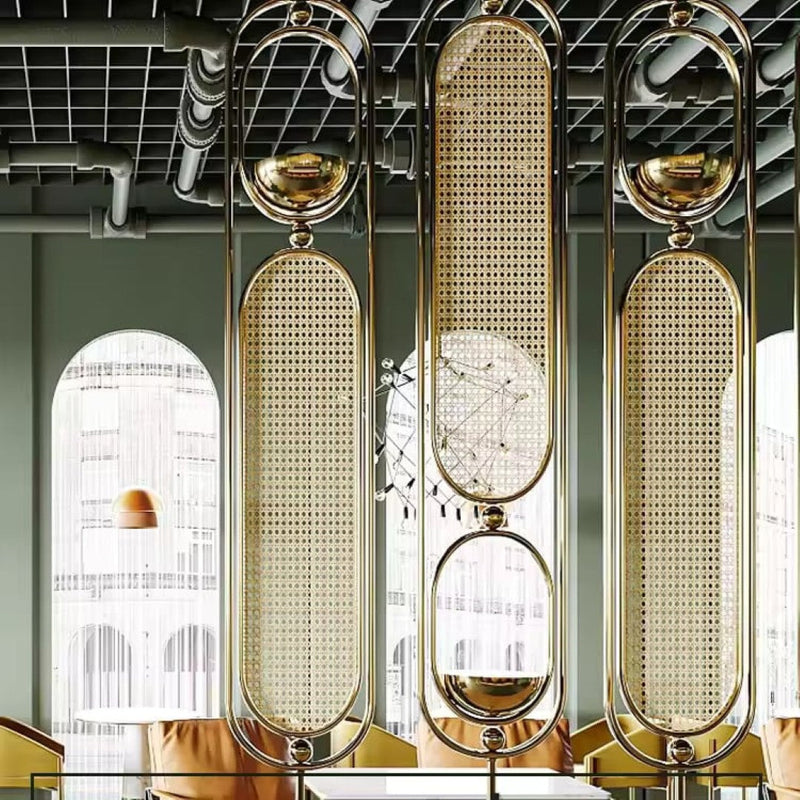
- Rattan and cane-weave partitions — a PVD metal frame combined with natural cane weave, such as the Modern Black Frame Rattan Weave Partition. Popular in cafés and boho-modern homes where you want warmth without going fully industrial.
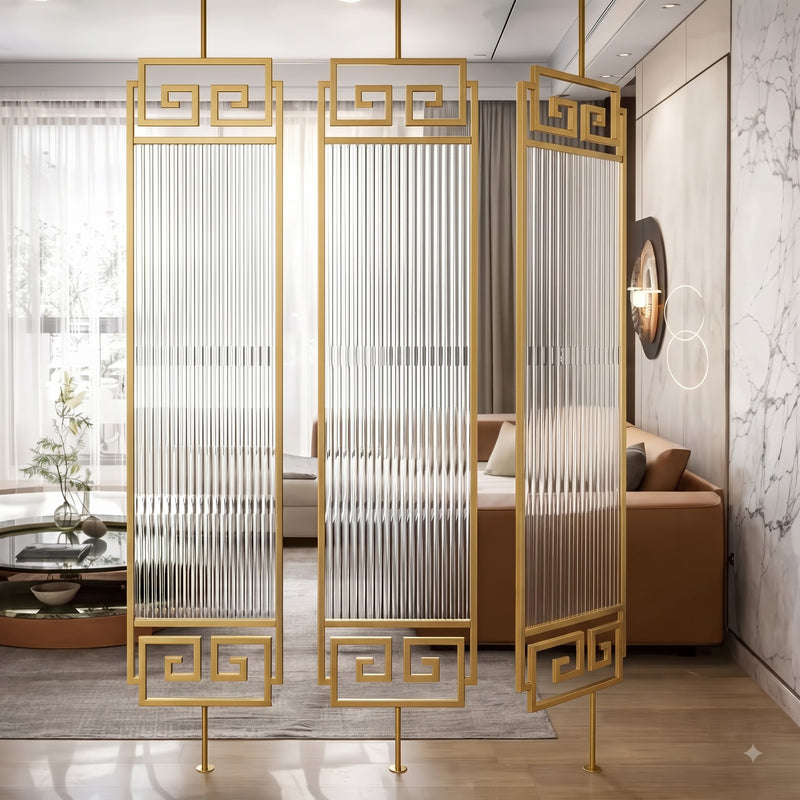
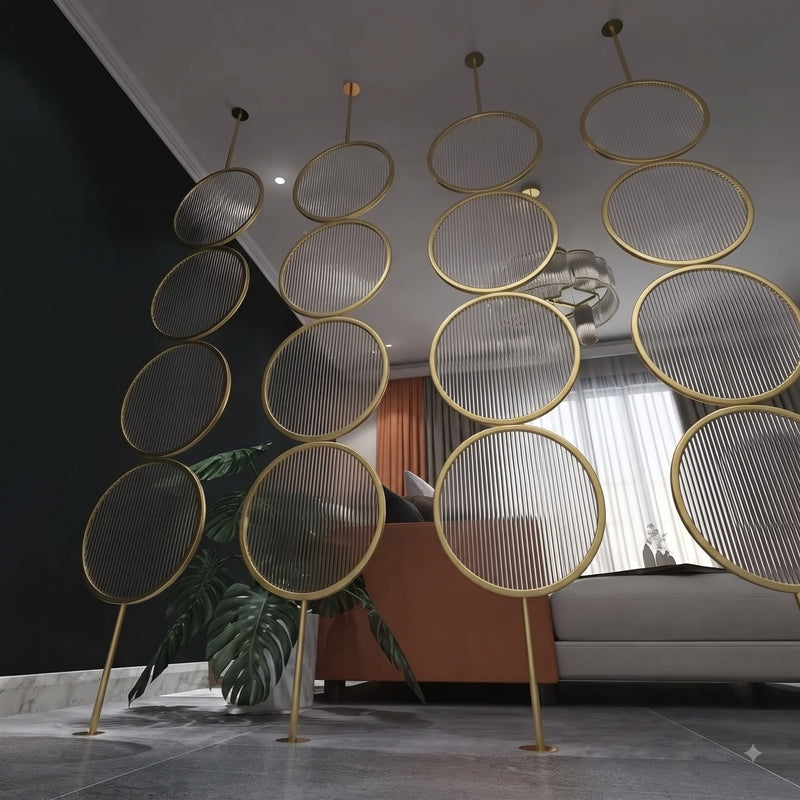
- Art Deco and geometric partitions — circular, radiating, or Greek-key patterns in solid gold-frame metalwork, like the Gold Frame Circular Mirror Partition. These read as a standalone art piece as much as a functional divider.
- Marble and metal partitions — PVD metal combined with marble inlay panels, a heavier, more formal option for living rooms and hotel lobbies.
Where they're used
Because the finish doesn't need upkeep, PVD partitions show up well beyond living rooms — we regularly supply them for office reception dividers, restaurant seating separators, hotel lobby screens, and café counters, alongside residential entryways and open-plan living-dining separations.
What affects the price
Our SS PVD partitions generally run from around ₹15,000 to ₹19,000+ depending on three things: overall size (panel count and height), design complexity (a laser-cut geometric pattern costs more to produce than a plain frame), and material mix — pieces that combine PVD metal with glass, marble, or rattan sit at the higher end versus metal-only designs.
Caring for your PVD partition
This is the part most guides skip, and it's the actual advantage of PVD over brass:
- Wipe with a dry or slightly damp microfiber cloth — no metal polish, no brass cleaner, ever.
- Avoid abrasive scrubbers or steel wool; they can scratch the coating even though it's hard-wearing.
- For glass-panel designs, clean the glass separately with a standard glass cleaner, keeping it off the metal frame.
- No re-lacquering or re-polishing is needed for the life of the piece — that's the entire point of the PVD process.
Choosing the right one for your space
A quick rule of thumb: glass-panel and mirror-accent designs work best where you still want light and openness (living-dining separations, entryways). Rattan and marble-metal designs suit spaces that need more visual weight or warmth (cafés, formal living rooms). Gold and rose gold finishes pair naturally with wood and warm-toned interiors, while black and champagne work better against marble, white, or cooler palettes.
Browse the full range in our SS PVD Partition collection — every piece ships free across India and is backed by our 5-year warranty.