Cart
0
How Many Panels Do You Actually Need? A Sizing Guide

Panel count gets treated as a style choice when it's really mostly a sizing and stability question. More panels isn't automatically better or more premium, it's a function of the width you're covering and how you want the piece to behave.
A single wide panel works for a narrower gap, roughly up to 60-70cm, where a connected multi-panel structure isn't really necessary. Beyond that width, a single panel starts to look visually thin relative to its height and can feel less stable, which is where splitting the same total width across two or three connected panels helps, both visually and structurally.
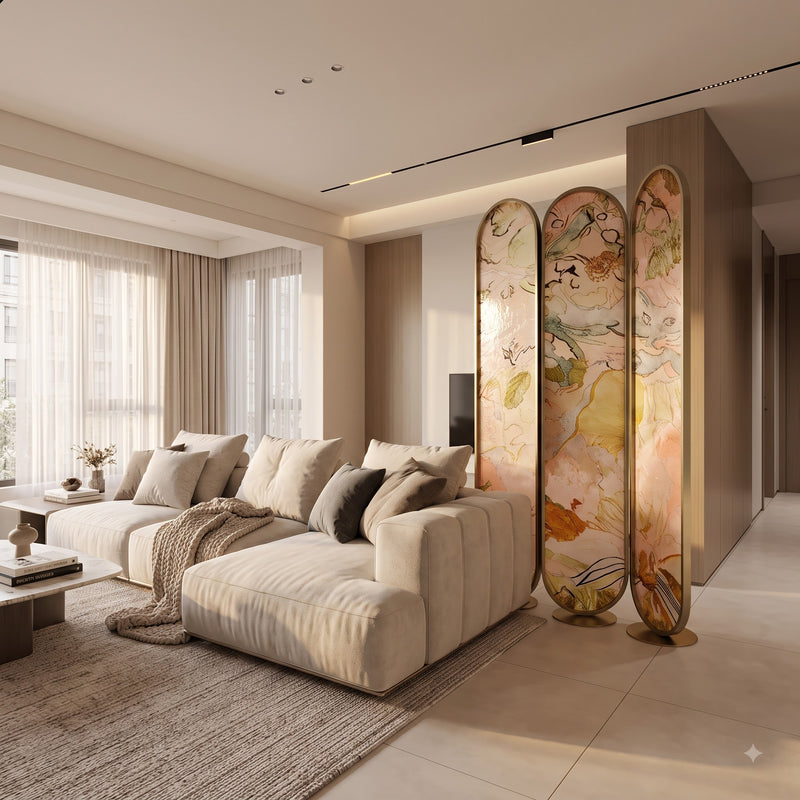
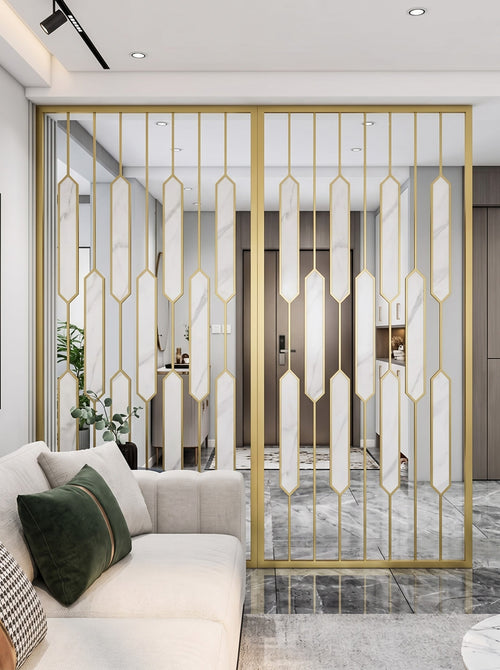
Two to three panels is the most common configuration in our range and covers most living-dining and entryway placements without needing custom sizing. It also gives you a small amount of flexibility, since connected panels can sometimes be angled slightly rather than installed perfectly flat, which is useful in a room that isn't perfectly rectangular.
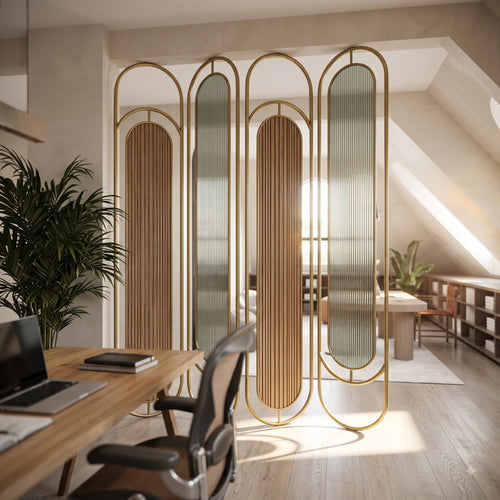
Four or more panels generally comes into play for wider spans, full-width living-dining boundaries in larger homes, or where you want the option to fold or reposition sections later. This is also where our note on what to expect during installation is worth a read, since more panels means more connecting hardware to work with during setup.
If you're unsure which to pick, go back to the actual measurement first, covered step by step in how to measure your space before buying a partition, and choose panel count based on that number rather than picking a panel count you've seen look good in a photo of a differently sized room.
Browse multi-panel options across the full PVD Partitions collection. Every piece ships free across India with a 5-year warranty.